Sunday, October 30, 2022

Orthopraxis (Correct Practice) Corner: Prostrations at Liturgy

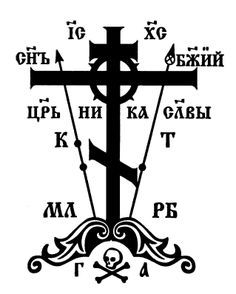
Most of us attend services on Saturday nights and Sunday mornings, when prostrations are not done. But at all the other Divine Services of week prostrations might be done – or not. :) How can you know?! Please see the flyer below – all the information is there. Questions are always welcome to Fr. Gregory or Fr. Colin!

MORE INFORMATION

Monday, September 19, 2022

Sts. Peter & Febronia of Murom ~ Препп. Петр и Феврония Муромские


Sermon given on September 5/18, 2022 at Dormition Cathedral, Ferndale, MI
Translation: Deacon Peter Longan

In the name of the Father, and of the Son, and of the Holy Spirit!

Во имя Отца, и Сына, и Святаго Духа!

Dear Brothers and Sisters in Christ,

Возлюбленные о Христе братья и сестры!

Today the Holy Church commemorates the lives of the Venerable Peter and Febronia of Murom. These two ascetics undertook their spiritual struggle first as a married couple, and then, after their children had grown, they established two monasteries: one for men and one for women, and took monastic vows. They died on the same day and in the same hour, on June 25, 1228. This date falls always during the Apostles fast, and so, since these two favorites of God and Wonderworkers have become beloved patron saints of the married, just as Martyrs Adrian and Natalia, there was a cry from the faithful to establish a second date of their commemoration on which marriages could take place. As you know, marriages cannot take place on the eve of a fast or a feast, and thus, the feast we are celebrating today was established by the Holy Synod several years ago so that marriages could take place on the day of Sts. Peter and Febronia.

Сегодня Святая Церковь празднует память преподобных Петра и Февронии Муромских. Эти два подвижника начали свою духовный подвиг сначала как супружеская пара, а затем, когда их дети выросли, они основали два монастыря: мужской и женский, и приняли монашеский постриг. Они умерли в один и тот же день и час, 25 июня 1228 года. Эта дата всегда выпадает на Апостольский пост, и поэтому, поскольку эти угодники Божии и чудотворцы стали любимыми святыми покровителями женатых, как и мученики Адриан и Наталия, от верующих поступил призыв установить второй день памяти, в который можно было бы заключать браки. Как вы знаете, браки не могут заключаться накануне постного дня или праздника, и поэтому праздник, который мы отмечаем сегодня, был установлен Священным Синодом несколько лет назад, чтобы браки могли заключаться в день святых Петра и Февронии.

Today I ask that you take only one thing home with you from the church in the light of the exemplary lives of Sts. Peter and Febronia. That one thing is: marriage is ascetic struggle. Just as monasticism is ascetic struggle. Each has its benefits and its drawbacks, but neither the married life nor the monastic life is a life of leisure. As Orthodox Christians we must understand that life is work. Life is struggle. Life is asceticism. That is true in the world, and that is true in the monastery. We choose the life we lead: as married people, as monastics, or the most difficult: as single people living in the world. But no matter which life we choose, we also choose to struggle for the Heavenly Kingdom. There is no life for Orthodox Christians that is not ascetic in nature. If we live we must struggle.

Сегодня я прошу вас вынести из церкви только одну вещь в свете образцовой жизни святых Петра и Февронии: брак - это аскетическая борьба. Так же, как монашество - это аскетическая борьба. У каждого из этих жизненный путей есть свои преимущества и свои недостатки, но ни супружеская жизнь, ни монашеская жизнь не являются жизнью досуга. Как православные христиане мы должны понимать, что жизнь - это труд. Жизнь - это борьба. Жизнь - это аскетизм. Это верно в миру, и это верно в монастыре. Мы сами выбираем, какую жизнь вести: как женатые люди, как монашествующие или, что самое трудное, как одинокие люди, живущие в миру. Но какую бы жизнь мы ни выбрали, мы также выбираем борьбу за Царство Небесный. Для православных христиан нет жизни, которая не была бы аскетической по своей природе. Если мы живём, мы должны бороться.

Too often we have a worldly, overly romantic, comfort based understanding of marriage. Somehow we fall into the delusion that monastic life is struggle, but living in the world is about comfort. This is why so many marriages fail: the spouses do not understand that marriage is work. If you do not work you will not succeed. There is no other formula: success only comes before work in the dictionary. That is, if you do not work you will not have success. And if you work without God’s blessing you will not have success. 

Слишком часто мы имеем мирское, слишком романтическое, основанное на комфорте понимание брака. Почему-то мы впадаем в заблуждение, что монашеская жизнь - это борьба, а жизнь в миру - это комфорт. Вот почему так много браков терпят неудачу: супруги не понимают, что брак - это труд. Если вы не будете работать, то не добьётесь успеха. Другой формулы не существует. Если вы не будете работать, у вас не будет успеха. А если вы будете работать без Божьего благословения, то успеха не будет.

If we want to succeed in this life, that is, attain the Heavenly Kingdom as spouses, we must work diligently WITH GOD’S BLESSING. Working hard at a marriage that is not blessed by the Church is a fool’s errand. Having your marriage blessed in the Church and expecting that God will do all the work is a fool’s errand. Just as the monastic who struggles pridefully is bound to fall into delusion, so too, we who do not cooperate with God in our marriages are doomed to failure.

Если мы хотим преуспеть в этой жизни, то есть достичь Царства Небесного как супруги, мы должны усердно трудиться с Божьим благословением. Усердно трудиться над браком, который не благословлён Церковью, - пустое занятие. Благословлять свой брак в Церкви и ожидать, что Бог сделает всю работу, - это глупость. Как монашествующий, подвизающийся в гордыне, обязательно впадёт в заблуждение, так и мы, не сотрудничающие с Богом в наших браках, обречены на неудачу.

So let us go forth today from God’s House with this clear understanding: marriage is an ascetic exploit. We must work diligently for success, and we must work wisely, that is, with God’s blessing on our marriage. If you have not been married in the Church yet then let these words be a call for you to arrange this as soon as possible, whether you have been together as a couple for a year, for 10, or for 50: every marriage needs God’s blessing to be truly successful. If we work in cooperation with God, and we work diligently, we can have great hope that our marriage will lead us to His Kingdom! The Lord blessed marriage in the New Testament not only for the procreation of children (as in the Old Testament), but so that all – husband, wife, children – could attain the Heavenly Kingdom. To attain the Kingdom is our goal, whether we live in the world or in the monastery. Let us decide today that we will adopt this paradigm: of hard work with God’s help leading to success. If we do this, we can have great hope that we too will follow Sts. Peter and Febronia, whom we celebrate today, into the Heavenly Kingdom! May the Lord grant this to all of us! Amen!

Поэтому давайте сегодня выйдем из Дома Божьего с ясным пониманием того, что брак - это аскетический подвиг. Мы должны усердно трудиться для достижения успеха, и трудиться мудро, то есть с Божьим благословением на наш брак. Если вы ещё не венчались в Церкви, пусть эти слова будут для вас призывом сделать это как можно скорее, независимо от того, были ли вы вместе как пара год, 10 или 50 лет: каждый брак нуждается в Божьем благословении, чтобы быть успешным. Если мы работаем в сотрудничестве с Богом и усердно трудимся, мы можем обоснованно надеяться, что наш брак приведёт нас в Его Царство! Господь благословил брак в Новом Завете не только для рождения детей (как в Ветхом Завете), но для того, чтобы все - муж, жена, дети - могли достичь Царства Небесного. Достижение Царства - наша цель, независимо от того, живём ли мы в миру или в монастыре. Давайте сегодня примем для себя эту формулу: упорный труд с Божьей помощью приводит к успеху. Если мы сделаем это, то есть шанс, что и мы последуем за святыми Петром и Февронией, которых мы сегодня празднуем, в Небесное Царство! Пусть Господь дарует это всем нам! Аминь.

Monday, July 25, 2022

Equal to the Apostles St. Olga ~ Святая равноапостольная великая княгиня Ольга


Sermon given on July 11/24, 2022 at Dormition Cathedral, Ferndale, MI
Translation: Deacon Peter Longan

In the name of the Father, and of the Son, and of the Holy Spirit!

Во имя Отца, и Сына, и Святаго Духа!

Dear Brothers and Sisters in Christ,

Возлюбленные о Христе братья и сестры!

“Blessed art thou amongst the women of Rus’, in that thou hast forsaken the darkness and hast loved the Light.” 

These words were spoken to the Great Princess of Kiev, the Equal to the Apostles Olga, by Patriarch Thophylact of Constantinople at her baptism in 954. Let us, especially the women of our parish family, on this day of perhaps the greatest of the female saints of Rus’, strive to love the Light. Not just to tolerate the Light. Not just to acknowledge it on Sunday mornings as something that has no impact on our everyday lives, but LOVE the Light 24 hours per day and 365 days per year. And by Light, we of course mean God and the Godly life that is so far removed from the world in which we now live. Only a live fish swims upstream. The dead fish float downstream with the current. We must strive to swim against the current of this world towards God, because the current of this world is flowing away from Him at an ever greater pace.

«Благословенна ты в женах русских, яко возлюбила еси свет, а тьму оставила еси.»

Сии слова были сказаны святой равноапостольной великой княгине киевской Ольге патриархом константинопольским Феофилактом на ее крещение в 954 году. Будем же все, а особенно женщины нашей приходской семьи, в день едва ли не величайшей из русских святых жён, стремиться любить Свет. Не просто терпеть Свет. Не просто утром отдавать Ему должное по воскресеньям, как что-то, что не имеет никакого влияния на нашу повседневную жизнь, но и ЛЮБИТЬ Свет 24 (двадцать четыре) часа в сутки и 365 (триста шестьдесят пять) дней в году. И под Светом мы, конечно же, подразумеваем Бога и Божественную жизнь, столь далёкую от мира, в котором мы сейчас живём. Вверх по течению плывёт только живая рыба. Мертвая рыба плывёт вниз по течению. Мы должны стремиться плыть против течения мира сего к Богу, потому что течение мира сего утекает от Него со всё бóльшей скоростью.

Before we further discuss the life of St. Olga the Wise I would like to pause briefly to note one of her most important acts as sovereign. Although she did not succeed in bringing Rus’ to Christ in her lifetime, she did not forget those that came before her. 

Over the grave of Askold she built the St. Nicholas Cathedral and over the grave of Dir the Sophia Cathedral. But she not only looked back at the nascent successes of those who shared her vision of Christian Rus’ – she also looked forward to the ultimate day of Christ’s triumph over paganism in Rus’. She understood that her prayers for her posterity were, as it says in the fifth chapter of the Book of Revelation, brought before the Throne of God. And this is true of all our prayers. 

Прежде чем мы продолжим наши рассуждения о житии святой Ольги Премудрой я хотел бы ненадолго остановиться на одном из важнейших её деяний как государыни. Хотя ей и не удалось привести Русь ко Христу при жизни, она не забыла тех, кто был до неё.

Над могилой Аскольда она построила Никольский собор, а над могилой Дира Софийский собор. К тому же, она не только оглядывалась на зарождающиеся успехи тех, кто разделял её видение христианской Руси, но и предвкушала последний день торжества Христа над язычеством на Руси. Она поняла, что её молитвы о потомстве были, как сказано в пятой главе книги Откровения, вознесены пред Престолом Божиим. Это же относится и ко всем нашим молитвам.

Thus, our attendance at the Divine Services should not be simply attendance, but prayerful participation. Some of us will sing, some will serve in the altar, others will stand in their place and pray. But no matter how we participate we should not “endure” our time in the church, but embrace it, love it, and desire for it to be longer rather than shorter. That is why, when we have a long Gospel, such as for the Sunday of the Paralytic or the Sunday of the Samaritan Woman, we should be thankful that we get to be in church and to hear the word of God for even a few minutes longer than normal. 

Так, наше присутствие на Богослужениях должно быть не просто присутствием, а молитвенным участием. Кто-то из нас будет петь, кто-то служить у алтаря, кто-то будет стоять на своём месте и молиться. Но как бы мы ни участвовали, мы должны не «терпеть» наше пребывание в церкви, но ожидать его, любить его и желать, чтобы оно было дольше, а не короче. Вот почему, когда у нас длинное евангельское чтение, например, о Неделю о расслабленном или в Неделю о самаряныне, мы должны быть благодарны за то, что можем быть в церкви и слушать слово Божие хотя бы на несколько минут дольше, чем обычно.

Our prayers are brought before the very Throne of the Lord – let us make our time here in the church prayerful. Let us spend it praying for our friends, loved ones, neighbors, but especially for those whom we do not like! And if we struggle to forgive, then let us spend our time in church asking the Lord to help us to forgive!

Наши молитвы возносятся к самому Престолу Господню, а посему пусть наше время здесь, в храме, будет молитвенным. Давайте проведём его, молясь за наших друзей, близких, ближних, и особенно за тех, кого мы не любим! И если на трудно прощать, то будем проводить время в церкви, прося Господа помочь нам простить!

Let us not forget that the relationship between the persons of the Holy Trinity is defined by love, and therefore the relationship that is between us, worshipers of the Holy Trinity, must also be defined by love. This may not be easy for us, but we must strive, asking God’s help, to attain this true Christian Love!

Не будем забывать, что отношения между Лицами Святой Троицы определяются любовью, и поэтому отношения, которые есть между нами, поклонниками Святой Троицы, должны определяться также любовью. Это может быть для нас трудно, но мы должны стремиться, прося помощи Божией, достичь сей истинной христианской любви!

Most of us know the life of St. Olga rather well, and most of us know what Google is, and thus can read this life at our leisure at any time. I will not dwell here on the particulars, but will encourage you to use the internet for something good today and look for her life. Read it on pravosalvie.ru or some other reputable site. I do not have to tell you that most of the world, including most of us, use the internet mostly for things that are not edifying, social media being at the head of the unedifying beast. Let us try something new before we rest tonight and use the internet for our salvation by reading the life of St. Olga. And then praying for all our friends and loved ones named Olga, whether they be with us in the Church Militant or have gone on to their eternal reward. Prayers for others can help us to be more zealous in our prayer life in general, and are highly recommended.

Многие из нас знают житие св. Ольги довольно хорошо, и несомненно большинство из нас знает, что такое Google, а поэтому могут почитать её житие на досуге в любое время. Я не буду останавливаться здесь на подробностях, но призываю вас сегодня воспользоваться Интернетом для чего-то хорошего и поискать её житие. Почитайте на pravosalvie.ru (православие точка ру) или ином авторитетном сайте. Мне нет необходимости вам говорить, что большая часть мира, включая большинство из нас, использует Интернет в основном для вещей, которые не являются назидательными, а социальные сети стоят во главе этого "неназидательной" орды. Давайте сделаем что-то необычное, перед тем, как мы сегодня расслабимся в пустых развлечениях, и воспользуемся Интернетом для нашего спасения, прочитав житие св. Ольги. Потом помолимся за всех наших друзей и близких с именем Ольги, будь они с нами в Церкви Воинствующей или ушли в вечность. Молитвы за других могут помочь нам быть более ревностными в нашей молитвенной жизни в целом, и мы настоятельно рекомендуем их.

“The sons of Rus’ do bless thee, and thy posterity unto all ages.”

These words were spoken to the Great Princess of Kiev, the Equal to the Apostles Olga, by her grandson, the Great Prince and Equal to the Apostles St. Vladimir, on the day of the Baptism of Rus’: August 1, 988. That date is correct, and is found easily in the Chronicles. Those that commemorate the Baptism of Rus’ along with the feast of St. Vladimir are simply mistaken, although surely not malicious.

«Благословити тя имут сынове русстии и в последний род внук твоих».

Эти слова были сказаны великой княгине киевской, равноапостольной Ольге, её внуком, святым равноапостольным великим князем Владимиром, в день Крещения Руси: 1 августа 988 года. Эта дата верна и легко читается в летописях. Те, кто отмечают Крещение Руси вместе с праздником св. Владимира просто заблуждается, хоть и не злонамеренно.

St. Olga began her life as a pagan. She ended it with the title “Equal of the Apostles.” We must be honest that few of us will get to share that title. But all of us are called to the same Apostolic work, at least in general. Let us begin that work today by our zealous prayer in the Church, remembering that our prayers, should we in fact pray, are brought by the Angels to the Throne of God. Let us continue that Apostolic work by being more often in the church. And let us take the Divine Liturgy to the world through our zealous prayer at home, and by minimizing our time on Social Media. Just these few steps, with God’s blessing, can cause the Light to shine forth from us – just as it shone forth from St. Olga! And this is the light that our American neighbors are desperately seeking. It would be wrong to hide that light from them, but we cannot share what we do not have, so we must work diligently to have the light of Christ abiding in our hearts!

Святая Ольга начинала свой путь язычницей, а закончила его титулом «равноапостольная». Должно признаться, что немногие из нас удостоятся этого титула. Но все мы призваны к одному и тому же апостольскому делу, по крайней мере, в общих чертах. Начнём это дело сегодня с усердной молитвы в нашей церкви, помня, что наши молитвы, если мы действительно молимся, ангелами приносятся к Престолу Божию. Будем же продолжать эту апостольскую работу, чаще бывая в церкви. Будем же нести Божественную Литургию в мир через нашу усердную домашнюю молитву, минимизируя наше время в социальных сетях. Только эти несколько дел, с Божьего благословения, могут сделать так, что от нас воссияет Свет – как он воссиял от святой Ольги! И это тот свет, которого отчаянно ищут наши американские соседи. Было бы неправильно скрывать от них этот свет, но мы не можем делиться тем, чего не имеем, поэтому мы должны усердно трудиться, чтобы свет Христов пребывал в наших сердцах!

May we emulate St. Olga as we can, and ask her prayers before the Lord that we learn from her example by forsaking the darkness and loving the Light: living a God-pleasing life even in the midst of a world which encourages us to do the opposite. Slavs are generally know to be rather stubborn people. Let us use that gift of God to resist the world and march to the Heavenly Kingdom in the footsteps of the great daughter of Pskov and Princess of Kiev, the Holy Equal of the Apostles Olga! 

Будем подражать святой Ольге, насколько можем, и просить её молитв пред Господом, чтобы мы учились на её примере, оставляя тьму и любя Свет: живя богоугодной жизнью даже в мире, который побуждает нас делать противоположное. Славяне вообще известны своим упрямством. Воспользуемся этим даром Божиим, чтобы противостоять миру и идти в Царство Небесное по стопам великой дщери Псковской земли и Киевской княгини, святой равноапостольной Ольги!

Аминь! 

Friday, February 25, 2022

The Parish Church and the Ukrainian Crisis

Below please find an excellent piece by Fr. Colin about what a parish is, what a Christian is, and how to deal with issues such as the present Ukraine crisis in Parish Life and our Christian Life.

Asking Your Prayers,

Fr. Gregory

===

The Orthodox Church is the Body of Christ, established by Christ, and it is through union with this Body that all who were once enslaved to sin and death become one with Christ and receive Life from Him. How does this happen? Our Lord says that the Christian must "Abide in me, and I in you. As the branch cannot bear fruit in itself, except it abide in the vine; no more can ye, except ye abide in Me" (John 15:4). All who desire to be of Christ must set as the aim of their life Christ, and Christ alone. If we do not have as our aim Christ, we will be "cast forth as a branch, and is withered; and men gather them, and cast them into the fire, and they are burned" (John 15:6). If we do not abide in Christ, and set Him as our hope and desire, we cannot truly be of Him, as our hope and desire will be found elsewhere, where there is no life.

All who desire to live the Christian life must be united in this goal. We are called to come together and struggle for this goal as one body in a parish community, so that we might collectively strive towards union with Christ. This parish life is a struggle of those who live in the world, but Christ says of all who desire union with Him that "they are not of the world, even as I am not of the world" (John 17:16). The Church is not merely a Human organization, rather it is a Divine Human organism. It is where God dwells among men, where men struggle to unite with God. The unity of the Church is Divine, it is a gift of the Holy Spirit, who unites the Christian with Christ and thus makes all Christians one in Christ.

This union of men with Christ is the saving work of Christ, who saves men from the way of the world, which is death. The way of the world is the way of the devil, the enemy of God, who by deception has sought to ensnare man, God's beloved, to death. It is for this cause that the world hates all who have sought union with Christ in His Church and seeks to bring Christians back into it's clutches. The devil is, according to the Apostle Peter, "a roaring lion… seeking whom he may devour" (1 Peter 5:8). He does this through various attacks on the Body of Christ that seek to divide it and separate the brethren and thus make their aim not Christ, but that which has divided them.

The world seeks to offer competing ideologies that might unite men and be their aim. These are purely human organizations, the unity of such is a worldly unity unlike the unity of the Church. Being a worldly union its aim is worldly things, and cannot rise above worldly things. This union is a union of death, as it cannot give those united by it what it does not have: Life, which is of God.

The Ukrainian crisis is a tragedy, a war between brothers. This is a prime example of those who should be united in Christ allowing politics, the way of this world, to divide them. Many of us have loved ones on one side of the conflict. Some even have loved ones on both sides of the conflict. Even if we don’t have people directly involved, all of us have on both sides of this brothers and sisters in Christ who are at this time divided by worldly ideologies. This is a tragedy for us as a parish community, but we must not let it be a cause of division amongst us at Saint Vladimir’s. Father Gregory regularly reminds us that our political party is Christ, meaning the aim of our life should be Christ, and everything else should flow from this aim.

If we allow our political convictions to be a cause of division between our parish community, we have as our aim not Christ, but the devil. We are not abiding in Christ, we are abiding in the world, and there cannot be life in us if our source of unity is death. Does this mean we will agree with everyone in our parish community about how our society should be ordered, or how world affairs should be conducted? Certainly not. But these opinions cannot be a cause of division between us. “We know that we have passed from death unto life, because we love the brethren. He that loveth not his brother abideth in death” (1 John 3:14). Let love be our aim. Let Christ be our hope, not princes or the sons of men. Let us join together as a parish community and pray earnestly for the war in Ukraine, and through our love for one another, collectively abiding in Christ, may we be a light to the world, that they may see true Christian unity shine through the darkness of division and worldly death.

Saturday, January 8, 2022

Welcome to St. Vladimir’s! You don’t look like me – can you be an Orthodox Christian?

One of our parishioners recently shared with me some concerns about the way we welcome those who do not “look like us” at St. Vladimir’s. This is not the first time this concern has been shared with me. Others have mentioned this to me too in the last few months. But this time sort of got me to the saturation point, where I felt like we needed to reflect on this a bit as a parish.

My gut reaction to this concern was to protest vigorously. I suppressed that reflex with some effort and God’s Grace. I learned some time ago that I don’t always know everything that is happening in the parish. We have lots of people and there are lots of moving parts. For instance, I didn’t know that the nursery had essentially become useless for our young mothers for various reasons. But this issue was brought to my attention and we are putting things in place to fix that problem. So it is likely that my gut reaction here is wrong. Maybe we do need to work on this issue. Fr. Gregory Thought ≠ Reality (in all (maybe most?) cases). My powers of clairvoyance are proven to be poor. So PLEASE tell me if you feel something isn’t quite right – I will take your concerns seriously and we will try to fix it if at all possible. You can provide feedback here – anonymously or with your name attached.

This is not meant to be a puff piece to make some people with some political inclinations feel good. So please don’t take it as such. This is meant to be a call to action and a challenge in fulfilling our Christian duties. This note is about theology – not politics. It is different than Racism in the Church & Care for the Garden, published in July which dealt with the issue of racism in the Church more generally – this is more focused on specific actions we can take to welcome everyone to St. Vladimir’s and our theological obligation to do so.

Orthodox Christianity is as diverse as the people of the world. The Orthodox Church is maximally missionary in the way it sees itself, that is, to fulfill the Great Commission the Lord give to His disciples we do not distinguish race or ethnicity on any level:

“Go ye therefore, and teach all nations, baptizing them in the name of the Father, and of the Son, and of the Holy Spirit: Teaching them to observe all things whatsoever I have commanded you: and, lo, I am with you always, even unto the end of the world. Amen.” (Matthew 28:19-20)

There is no “maybe” there. Or “some nations that look like you”. Or teach “some things.” This is not an optional statement, and that is how the Orthodox Church has always seen the Great Commission: as something akin to a military order. Something that we are morally bound to strive to fulfill to the greatest extent that we can. The Russian Church has taken this very, very seriously as a rule over its 1000+ year history, and that continues until this day.

And I cannot believe there is even one of our parishioners who would deny that black folks, or Asian folks, or ANY folks are excluded from the Great Commission or excluded from the Church that our Lord founded for the salvation of all mankind. If asked I am certain that our parishioners, to a person, could and would explicate the theological truth that the Lord founded the Church for all humans without exception. Perhaps some would even be able to say something along the lines of “racism is condemned by the Church.” We include here the citation in this regard, so that everyone can become familiar with it if they are not already:

“We censure, condemn, and declare contrary to the teachings of the Gospel and the sacred canons of the holy Fathers the doctrine of phyletism, or the difference of races and national diversity in the bosom of the Church of Christ.” – Article I of the Decree of the 1872 Council of Constantinople.

The context of the 1872 council is complex, and that context has very real contemporary implications for the ongoing conversation within the Orthodox Church regarding the place of the Ecumenical Patriarchate, but that is not the topic here so we are going to leave that for another day. The takeaway for us is this: the Church has spoken on racism and it is condemned. This is a review – we have covered this in previous blog posts.

Our Orthodox worldview urges us to racial tolerance, and that makes sense not just because of a canon of the Church, but all the more so since our Lord modeled that for us in His ministry. On several occasions He reached out beyond the Hebrew nation (in John chapter 4 to the Samaritan woman, in Luke chapter 17 healing the Samaritan leper, in Mark chapter 7 the healing of the Syrophenician woman’s daughter, in Matthew chapter 8 the healing of the Centurion’s servant, etc.), providing us an example of how to execute His words found in the Great Commission. That is, to really take “all nations” as a serious reality – not just fluffy nice empty words. We tend to project our society’s widespread use of fluffy nice empty words on the Gospel. We have to struggle against that. Every word our Lord said has spiritual significance for those that were with Him then, and for all who hear His words until His coming again. Sometimes we need to remind ourselves of that theological reality in light of our society’s fluffy nice emptiness.

We see that we are called to be maximally inclusive by our Lord’s words and by His actions as He ministers to those outside the Hebrew nation. As Orthodox Christians we strive to emulate Christ to the greatest extent that we can, and that is true in this regard as well. This type of inclusivity is an important part of our Orthodox way of life, way of thought, and way of worship. We see all humans as having a soul equally dear to God and equally worthy of salvation. Our Lord gave us the example to follow and gave us His word in this regard in the Gospel. This word and example should be enough for any of us to strive to emulate Him in this way.

But here is the struggle: theory and practice are different. We can understand something in theory, but sometimes have trouble getting from theory to practice for various reasons. Maybe we don’t get to practice putting this theory into practice too much. Or maybe we bring with us to the Church old prejudices that we haven’t quite worked through yet. Or maybe we have our priorities a little out of whack and have to remind ourselves more often that God is first, others are second, and we are third. Or maybe we are hanging out (in person or on line) with some folks that are espousing non-Orthodox views regarding race and ethnicity. You can find plenty of people on-line who call themselves “Orthodox” but who espouse racists views in direct opposition to the Church’s teaching in this regard. There are many reasons why we might be able to speak or write eloquently about the Church’s absolute prohibition on racism, but then struggle to put the right actions into place when someone who doesn’t look like a typical white guy walks through the door of St. Vladimir’s. 

This is not a question of good or bad. Undoubtedly everyone wants to do good – otherwise why are we following Christ? Orthodox Christianity is not exactly the religion for those who wish to do evil. Except for those REALLY confused about the content of the Gospel. If we have some of those really confused folks among us let us thank God that He has sent them to us and strive to convert them by our example!

I think it is good for us to think along these lines: we do not have problems at St. Vladimir’s – just opportunities. And here we have been given an opportunity to emulate Christ in ministering to those outside our existing group. As with anything that we want to do better spiritually, whether that is sin less, serve others more, be in church more often, be at the bar less often, or whatever: we need to make our sincere effort and ask God to bless it. Then we try to learn from and repent of our mistakes, and repeat: make our sincere effort and ask God to bless it, taking into the account the mistakes we just made and prayerfully seeking to avoid those. Continue until your last breath. And that has to be our approach to those who do not look like we do. No matter what “we” look like. Because this is true whether we are talking about now, when our parish is relatively homogeneous - or later, when our parish and the other parishes in our state and nation are more and more diverse in their racial and ethnic membership. Because that will happen – that is the demographic reality of our nation. The question is: can we get it to happen faster? Because our “business” as a parish is the same “business” as the rest of the Orthodox Church. And that is the “business” of the Great Commission:

“Go ye therefore, and teach all nations, baptizing them in the name of the Father, and of the Son, and of the Holy Spirit: Teaching them to observe all things whatsoever I have commanded you: and, lo, I am with you always, even unto the end of the world. Amen.” (Matthew 28:19-20)

That is, we want to bring more people to Christ. People of every race and ethnicity. Christianity has always been diverse – since the Apostles first went out to preach. And the Orthodox Church has done all it can to keep it that way. And we need to continue this effort as a parish family.

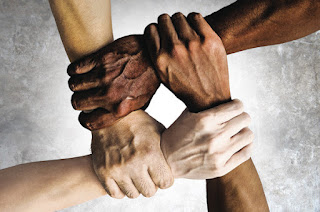
I have thought about how best to move us in this direction a good amount. It seems to me that a diverse photo gallery with pictures of those who are Orthodox Christians would be helpful, so I’ve created one here. Sometimes just seeing diverse folks who live the same lives as we do - as Orthodox Christians - helps us to normalize seeing them as Orthodox Christians, even if when we see them we see something very different than what we see in the mirror. If we don’t seek to normalize that, to create a place in our brain where we file pictures of “those who do not look like me but are Orthodox Christians”, then I think we will struggle with this both personally and as a parish family. But if we work on this a little bit now, following the instructions found here, then we won’t have to work on it at all the next time someone comes to St. Vladimir’s who “doesn’t look like me” - because we will have already internalized that reality. And then we will really, truly, sincerely, and without effort be able to welcome anyone of any race or ethnicity that walks through our doors. Because more folks are coming – and they will be more diverse. That is the demographic reality of America, and we need to prepare for that. 

We owe it to the Lord to fulfill the Great Commission to the best of our ability. I would submit that to do that we need to do a little of this homework now, so that we can put our theologically correct theory into practice with ease when the time comes. Let us invest now so that we, and those we welcome warmly into the Church, can reap the benefits later. Whether you feel like this applies to you or not (“I need to work on this” or “I’m good in this regard”) it is worth making the effort to be better (if you are “good” you can always be better) so that we can give the best answer to our Lord when He asks us about the Great Commission and how we strove to fulfill that, because I’m pretty sure that will be one of the questions we’ll need to answer when we meet Him. As your priest I will answer for your answer, so I’d really like you to give the best one you can! :) But not just because I don’t want to get in trouble at the last judgment – I think that is pretty much a foregone conclusion – but because we should all strive to do the right thing out of love for God rather than out of fear of punishment. And because I think we will all give a better answer if we work on this issue proactively than if we don’t.

Asking Your Prayers,

Fr. Gregory

P.S. My wife, wise as she is, noted after reading this that we should also be careful not to stare at people who DO look like us. :) Sometimes anyone who is new gets stared at. That is not terribly comfortable for someone who has gotten up the gumption to come to a new church where they might not know anyone at all. The Parish Council member on duty in the kiosk area will keep an eye on the visitors to make sure that they have all they need. Don’t be cold and refuse to look at someone. :) Or refuse to answer if someone asks you a question. But please don’t stare either. A smile to a visitor goes a very long way! 

Thursday, December 16, 2021

We Need More Priests: A Call to Action for the Future of Michigan

“For even the Son of man came not to be ministered unto, but to minister, and to give his life a ransom for many.” (Mark 10:45)

As Orthodox Christians we understand that we were not put on earth, nor was our Lord Incarnate, to maintain some sort of comfortable status quo. The Lord changed the world through His ministry. A book we are reading for our Teen Youth Group puts it this way: “The gospel of Jesus Christ is, in essence, an assault on the kingdom of the demons.” (Arise, O God, p. 34) Nothing about maintaining things as they are or small changes. Nothing about being good, or nice, or affirming the feelings of others. The Gospel is about blowing up the existing order (the demonic occupation of the world and control over humanity). As His followers – those that bear his name – we too are called to continue His ministry to the greatest extent possible through the talents He provides us for this very purpose. This is a great calling, and one we must answer with our sincere efforts and hoping in God’s blessing of these efforts.

Now, any one of us alone is very unlikely to change the world. But if we can break this thing down into digestible pieces perhaps we can get a better feeling of how we, as Orthodox people, can indeed change the world in our generation and prepare the ground for the next generation to change it even more, and so on and so forth.

As Orthodox Christians we see ourselves as both individuals and members of the group called “Orthodox Christians”. We work out our own salvation, as St. Paul writes, “with fear and trembling”. But we understand that the general rule is that we indeed perish alone, but are saved in community. That is, the usual method of life for Orthodox Christians is in a community: whether that be a parish or a monastery. But to live truly alone, as a hermit, is a rare feat that only a few saints have perfected.

As Orthodox persons we have as our first job to work on ourselves. Not to spend time judging others, but to judge ourselves, while at the same time we actively serve others and struggle against our sins. We serve others because when we serve other humans, made in God’s image and with a potential to attain to His likeness, we serve the Lord Himself:

“Verily I say unto you, Inasmuch as ye have done it unto one of the least of these my brethren, ye have done it unto me.” (Matthew 25:40)

But let’s not get ahead of ourselves. First – we work on ourselves. Our job is to be transformed into the sons and daughter of God. Not only to “be good”, but MUCH more than that: to be transformed. We are first and foremost in charge of the space that we can call “ourselves”, and spiritually we will answer for our efforts in this regard. Transformation can only take place according to our cooperative efforts with God. We’ve got to work hard and follow the Lord’s teachings as taught to us in the Church, His Body, which He founded for our salvation.

OK – that part is clear I think. Most of us understand our first job is to work on ourselves. Next – we get to the serving part. Our neighbors – however one defines that. You are welcome to define “neighbor” however you like of course. You have free will. But the Lord gives us a definition, so although we certainly have the “right” to reject this definition, why would we? The parable of the Good Samaritan, read just a few weeks ago in the church, guides us. These are the very words of the Lord Jesus Christ Himself:

“And, behold, a certain lawyer stood up, and tempted him, saying, Master, what shall I do to inherit eternal life? He said unto him, What is written in the law? how readest thou? And he answering said, Thou shalt love the Lord thy God with all thy heart, and with all thy soul, and with all thy strength, and with all thy mind; and thy neighbour as thyself. And he said unto him, Thou hast answered right: this do, and thou shalt live. But he, willing to justify himself, said unto Jesus, And who is my neighbour? And Jesus answering said, A certain man went down from Jerusalem to Jericho, and fell among thieves, which stripped him of his raiment, and wounded him, and departed, leaving him half dead. And by chance there came down a certain priest that way: and when he saw him, he passed by on the other side. And likewise a Levite, when he was at the place, came and looked on him, and passed by on the other side. But a certain Samaritan, as he journeyed, came where he was: and when he saw him, he had compassion on him, And went to him, and bound up his wounds, pouring in oil and wine, and set him on his own beast, and brought him to an inn, and took care of him. And on the morrow when he departed, he took out two pence, and gave them to the host, and said unto him, Take care of him; and whatsoever thou spendest more, when I come again, I will repay thee. Which now of these three, thinkest thou, was neighbour unto him that fell among the thieves? And he said, He that shewed mercy on him. Then said Jesus unto him, Go, and do thou likewise.” (Luke 10:25-37)

This is good! Not only do we get the definition of “neighbor” from this parable, but we get our marching orders too: “Go, and do thou likewise.” So we can probably say that we have some pretty clear responsibility to at least serve our neighbor, and hopefully through serving our neighbor with the light of Christ burning in our hearts (since we are also working actively on our transfiguration into the sons and daughters of God) our neighbor will want some of that light. Or in other words, will be attracted to the love of God that we are exhibiting by serving our neighbor.

We are making progress here! We have established that we need to work towards sanctification in ourselves, and also work on sanctification of our neighbors. That is starting to cover a lot of people all of a sudden. And when we understand that our priests will answer for all the people in our parish (probably that really means the geographical area of our parish rather than those who just come to church), then we understand that we need to work on the sanctification of our “area”, at least Washtenaw and Livingston counties, maybe even more. So now we are talking about spiritual work on ourselves, for our neighbor, and in support of our St. Vladimir parish.

Then we also need to take into account that I am the Dean of Michigan parishes. So following the same logic I probably need to answer for the souls of all the people in Michigan. And as part of our parish family you no doubt would like to help me with this task for the sake of love, so we are now talking about a pretty big responsibility and a pretty big space. And we have probably defined pretty well the maximum area of our work and where we will focus our efforts towards the destruction of the “kingdom of the demons”. 

Now when we say that I am the Dean of Michigan that might be a pretty easy place to point a finger and say “yes – you Fr. Gregory are responsible!” But remember, when we point a finger at someone we have three pointing back at ourselves. We are all, to a great or lesser extent, responsible to sanctify the place that God gave us. Let us concentrate on our Michigan for the sake of taking on something challenging, but not unfathomable.

The Roman Catholic Archdiocese of Detroit has 224 parishes. That diocese makes up about half the Catholic population of Michigan. These are rough numbers of course. So if we double that number of parishes we get 450. Because the rest of the state is mostly quite rural we should probably tack on about 50 more parishes to cover the spaces of rural Michigan where a parish would have to survive with fewer parishioners than one would be expected to have in the Detroit Archdiocese. I’m going to use the Catholic Church as a surrogate for having adequate coverage for the Catholic people in Michigan. Everyone who knows Roman Catholic folks knows this really isn’t true. They need more parishes. But let’s just go with 500 as a nice round number.

So if we are going to sanctify our Great Lakes State we are going to need something like 500 parishes. Roughly. Since the growth of Orthodoxy will necessitate some pretty big parishes in the urban areas that will serve Liturgy every day and need 3 priests as a minimum to do that (that is the standard pretty much – to do all the services every day you need 3 priests in your parish at the very least), and we’ll need some priests to cover sickness and vacation for other priests, then let’s say we’ll conservatively need 600 priests. Just for Michigan.

In our Diocese of Chicago & Mid-America right now we have 50 parishes and 75 clergymen approximately. There are 16 states in the diocese. Two of them do not even have one parish: Nebraska and South Dakota. Several only have one parish. We have three of the largest metropolitan areas in America in our diocese: Chicago, Dallas, and Houston. Chicago has three parishes. Dallas has one. Houston has two.

Clearly we all have a great amount of work to do to sanctify our diocese. Certainly we need thousands of priests to lead the Divine Services. And yes, we aren’t the only Orthodox folks in America, but it isn’t like the OCA and the Antiochians have hundreds and thousands of parishes in each state to make up for our dearth of physical presence. They are doing their best too, unquestionably, but we can’t sit back and count on someone else to do the duty that we are called to do. We know that they will do their best, but that is not code for “if they start doing more then we will too”. Nope – the only person that can change this situation is the one you see when you look in the mirror.

Let’s start by controlling what we can control. By influencing that which we can influence. In the broadest terms that is our Michigan. I think it is unlikely that our Lord will ask us about what we did, at least in any specific way beyond prayer, to foster the growth of Orthodox Christianity in Texas, for instance. But here in Michigan, I fully expect to have to answer. And I think it won’t just be me either. So what have we done to sanctify our state?

What we have done is begin to lay the foundations of the future. That is important! Every journey begins with the first step and our fathers and forefathers made huge efforts to found parishes and nourish them so that these parishes would be there to in turn nourish us. But what matters even more than what we have done is what we WILL do. And this is the point of this note. We need more priests. Lots more. Everyone needs to contribute to that. How? That is crazy talk! If half the people that read this are women they can’t serve as priests! And some of the men are already in their second marriages – they are not eligible! Fr. Gregory is talking nonsense – again!

Now that we’ve yelled at the screen let’s take a step back. We can ALL make a difference here. We can seriously encourage and seriously pray for our young men to consider the ordained ministry as a vocation. I mean seriously. Not like “oh yes – I considered that for 30 seconds and now we are moving on.” Real and loving encouragement and prayer. And we can have more children with the hope that at least one of our children will serve the Church in the clerical or monastic life – and it seems that is something reasonable for which each Orthodox family should be striving. To give at least one child back to the Lord, who has, frankly speaking, loaned us all the children we have for the sake of our salvation. And this is a challenge not just for this generation of Orthodox Christians either – each generation should strive more and more to serve and strengthen the Church (both in ordained and non-ordained ministries – this post is principally about the ordained ministry, but everyone is called to serve by the Lord – not just the men in cassocks). And those who are eligible, who could take up the life of an ordained clergymen, must really challenge themselves. Not just laugh this off as an impossible fantasy, but make a serious reflection and ask the Lord for real discernment. The Lord calls us to something great – to change the world – not just to be the most Christianized pagans in our society.

I remember when the idea of the priesthood was first proposed to me. I laughed. Right in Fr. Paul Karas’ face. Not out of spite, but because it was a nonsensical concept to my little selfish mind. I came to him asking for a recommendation for the University of Michigan School of Education. He was a teacher after all, and he served his entire ordained ministry while working full time as a teacher to support the Church. “If you would like to be a teacher why not be a priest – priests are teachers too.” My answer: “Ha!”. Or something equally erudite. I don't remember exactly the words, but I remember very much the sentiment. And if someone like me, who started with that mindset, can manage to get from “Ha!” to seminary to ordination, then the mature and wise men of our parish and deanery can surely find a path too. At least some of them. Perhaps most of them. Because it is important to understand: YOU ARE NEEDED! We have a great work to undertake! To sanctify the two peninsulas of our state. 

It will not just be the ordained clergy who do this of course. Much more important in many ways will be the prayers, the service, the Christian Love, and the examples of those who do not or can not heed the call to serve the Church in the clerical or monastic order (and when we say monastic order we are very much including women here too – women’s monasticism is crucial to an authentic Orthodox Christian witness, and historically there were always more women monastics in the Church than male monastics). But someone has to serve Liturgy. We aren’t going to accomplish this gargantuan task without a robust liturgical life. And for that we need priests.

I heard a very interesting sermon on the feast of the Nativity of the Mother of God that inspired this post. About how the people of the Old Testament exhibited the greatest love not for themselves, but for their future generations, and even for us Gentiles, by striving to have children so that the Messiah could come into the world. No one then was so self-obsessed that they thought THEIR child would be the Messiah. But they understood that the Messiah would only come into the world through the Hebrew people, and so they needed to prepare the next generation to receive Him. They knew it was virtually impossible that they would live to see Him themselves, but they knew He would come – they trusted God’s promise. 

We don’t look to the Old Testament for a lot of personal examples. The life then was difficult and very different. The people were rough. Their lives were not for us to emulate because we live in a new epoch of the Incarnation of that very Messiah they so longed for and strove for. But here I think we have to see their love for their progeny and do our best to emulate it in a New Testament way. For the sake of the Love of God and the love of our fellow men we have to work for the sanctification of more of the people of our state in this generation, in the next generation, and in all subsequent generations until the Lord comes again. This is a radical departure from the status quo of our mostly satisfied and selfish lives. Yes – we have some problems: personal and societal. But we need to refocus on what is most important. Not the newest iPhone, not the latest political distraction, but salvation. Our salvation. Our neighbor’s salvation. Our family’s salvation. Our parish family’s salvation. And the salvation of the people of our state. And for all of these categories: the salvation of those alive now, and the generations to be born until the coming of the Lord. And I suggest that we need to do approach this with a heart set to take action, not just bemoan the present and its challenges.

I am guessing few of us have ever considered this idea previously in just this way. Honestly I hadn’t really either – until I heard that sermon on the Nativity of the Theotokos. But if you think it through it is obvious – we can’t just live for the present if we love God – we have to think about forever. We can’t just think about the gospel as the destruction of the kingdom of the demons for one generation and let them come back for the next.

Let us embrace this radical call: to change the world. Not just to focus on ourselves, but to focus on our neighbors, our parish, our state. Not just to focus on this generation, but all subsequent generations. If we all do this, then within a few generations our Michigan and our country will be substantially made up of Orthodox Christians. We will have given the greatest gift we can to anyone and everyone: the Pearl of Great Price. The True Faith. Eternal life. We can do this – but only by hard work and God’s blessing. Or we can do nothing – and nothing will happen. Of course, if the Lord so wishes He can make everyone in our state show up at our few parishes here tomorrow to be baptized. But it has never worked that way in history, so there is no reason to think it will this time either. Rather, we’ve got to get off the couch and get to work. And if we all do this – not just the ordained ministers – but ALL of us – we can do it indeed. 

The Lord has shown that He will bless efforts for His glory and the salvation of others time and time again in the history of the Church. Think of the spread of Orthodox Christianity across Asia and into North America. Was that "possible"? Of course not - it was a total fantasy by the standards of "reasonable" people who were comfortable with the status quo. But the missionaries kept working, generation after generation, until they reached the Pacific. And then they went to Japan. And Alaska. And California. And the rest of North America. As Orthodox people here in a non-Orthodox land we are missionaries, and we must adapt this very paradigm to do the work that we are called to do. And thank God that we have our Ann Arbor Orthodox Classical Academy and our Pastoral School to help us to prepare ourselves and our future generations for this work! These institutions need our prayers, time, talent, and treasure to continue their labors, but that is another post for another time. The point is that we have resources to get started, and we should utilize of those resources!

This spread of the faith across Asia to North America was "impossible", but it happened. Why? Not due to a desire to conquer, but to love. To share Christ's Love. This is not even to mention the incredible spread of Christianity immediately after Pentecost. And since this is the way it has always worked, we should have firm hope this it will work that way again. Will we see the end product? No – we have to be honest that we will not. But like those people of the Old Testament that loved their progeny enough to work as hard as they could to see to it that the Messiah came into the world, or the missionaries in Russia bringing the True Faith to the people of Asia and North America, or the Apostles who began to preach after Pentecost, we too must love our neighbors and their progeny enough to be willing to put in the work now, trusting that the Lord will crown those efforts in the future, and that He will not forget our efforts on the Last Day.

The bottom line and the end of this post: we need to trust God's promise for the New Testament people just as the Hebrews trusted His promise that the Messiah would indeed come. This is His promise and His radical charge for us, directly from the Gospel:

“Go ye therefore, and teach all nations, baptizing them in the name of the Father, and of the Son, and of the Holy Spirit: Teaching them to observe all things whatsoever I have commanded you: and, lo, I am with you always, even unto the end of the world. Amen.” (Matthew 28:19-20)

I am suggesting here that we just have to do MUCH LESS than this, and only take care of the Michigan part of “all nations”. May the Lord motivate us and bless our efforts!

Asking Your Prayers,

Fr. Gregory

Monday, October 18, 2021

Is the Covid Vaccine the Mark of the Beast?

I hope that every Orthodox Christian who reads this is immediately shocked and dismayed at this question, principally because of its completely ridiculous underpinnings. Of course the answer to this is no, and I hope that this is immediately obvious to everyone. If not – I have not done my job very well at all as the Rector of our parish, and I ask that you reach out to me as soon as you can so that we can work this through.

Next: why would I even ask this question, given it is so divergent from the Orthodox understanding of Eschatology (literally, “the last things”) - the study and understanding of the second coming of our Lord Jesus Christ? This second coming is discussed by several of the authors of the New Testament and is a thread that runs throughout the New Testament. It is covered in great detail in the Apocalypse of St. John the Theologian, albeit with much allegory and symbolism, which is why Orthodox Christians should always read this book of the Bible with a solid Orthodox explanation handy to refer to. Archbishop Averky’s might be the best available in English, although we read Fr. Lawrence Farley’s for a Great Lenten book club a few years ago and that was quite good too. Bottom line: you cannot be fooled into accepting the Mark of the Beast. You must voluntarily accept this, with a full understanding of the repercussions of your actions. And it is the opinion of the Venerable Gabriel of Georgia (someone quite familiar with the realities of Orthodox spiritual life) that you can repent of your choice in this regard and be forgiven (not that it is good to voluntarily commit any sin with the plan to repent as a rule, since the Lord does not promise us tomorrow). 

But I still haven’t answered the question: why even ask this silly question? Archbishop Peter has stated on several occasions that the vaccine is not an ecclesiastical one, but rather a medical one. That means that Vladyka is quite certain that the vaccine is not the Mark of the Beast, and as our Abba, our Spiritual Father, his word carries very heavy weight in our spiritual lives. But please read here what Metropolitan Hilarion, our First Hierarch, says on the same topic:

“Vaccination is not a new thing, it has existed for a long time, so people should not fear it. For instance, I was vaccinated as were many others. But some are very alarmed by this. In this case the Church makes no recommendations: we do not advise people to be vaccinated, nor to reject vaccination. This is the free choice of every person.”

This is from an article posted on the Synodal Web Site last month. In Russia the guidance from the Church has been much stronger. Just as our Metropolitan was vaccinated, so too was the Patriarch. Metropolitan Hilarion of Volokolask, head of the External Relations Department of the Moscow Patriarchate, was less subtle in his statements than our hierarchs earlier this year.

Finally the answer: we ask this question here because there are those that are out there spreading such erroneous teachings and scaring those who are new to the faith, or who are not theologically strong in their knowledge of their faith. Those spreading these lies need to be confronted. This is a small effort in this regard, since I do not know who they are. But I know they are there, because people are coming to us in great fear that they have given their souls to the Devil by receiving the vaccine.

If, having read all this your answer is “all the bishops and priests are fooled – the vaccine is the Mark of the Beast”, then I do not think I can help you. God can – He can help you to regain your sanity, perhaps through long work with a Psychiatrist. But assuming that you are not spiritually deluded, and you understand that our hierarchs desire first and foremost the salvation of their flock, then please know that, according to one of our priests who experienced this in his former, Protestant life, that these ideas are all old style Protestant millenarianism and fanaticism. He supposes, and I think this is a very valid theory, that this has all affected the Church through the gradual assimilation of these Protestant beliefs and teachings from those who came to the Church from Protestantism, but did not throw off the old man, as St. Paul alludes to. This has all been "cleaned up" and Orthodoxified by those seeking to impose Protestant ideas onto the pure faith conveyed to us from our Savior, found only in the Holy Church. Do not be fooled. The vaccine is not the Mark of the Best.

Whether you choose to be vaccinated or not is up to you – Metropolitan Hilarion and Archbishop Peter have made that abundantly clear. This is a medical question and not a spiritual one, according to our hierarchs. If you keep that in mind, such nonsense as “the vaccine is the Mark of the Beast” will not be anything to you but a call to pray for those who spread such errors in their delusion. And let us pray brothers and sisters! For those who have been fooled by such un-Orthodox teachings, and especially those who are ruining their souls by spreading such heretical teachings. And let us strive for peace, because in this pandemic many have lost their way in this regard. “Acquire the spirit of peace and 1000 around you will be saved”. These are the words of St. Seraphim of Sarov. I think we can say he understood the realities of spiritual life a bit better than our Orthodox millenarianists. And if you agree with St. Seraphim, which I hope you do, let us strive diligently for that peace so that we may help thousands of others to the calm haven of our Orthodox Church.

Asking Your Prayers,

Fr. Gregory